Leadership is not simply a position; it’s a responsibility to grow, influence, and cultivate strong organizational cultures.
Being a leader today is harder than ever.
The business environment is more competitive, organizations are dealing with rapid change, leaders are burning out, and expectations are higher. In countless cases, technical skills alone are not enough to move teams and companies forward. Self-awareness, emotional intelligence, and the ability to build strong corporate cultures are what really set exceptional leaders apart today.
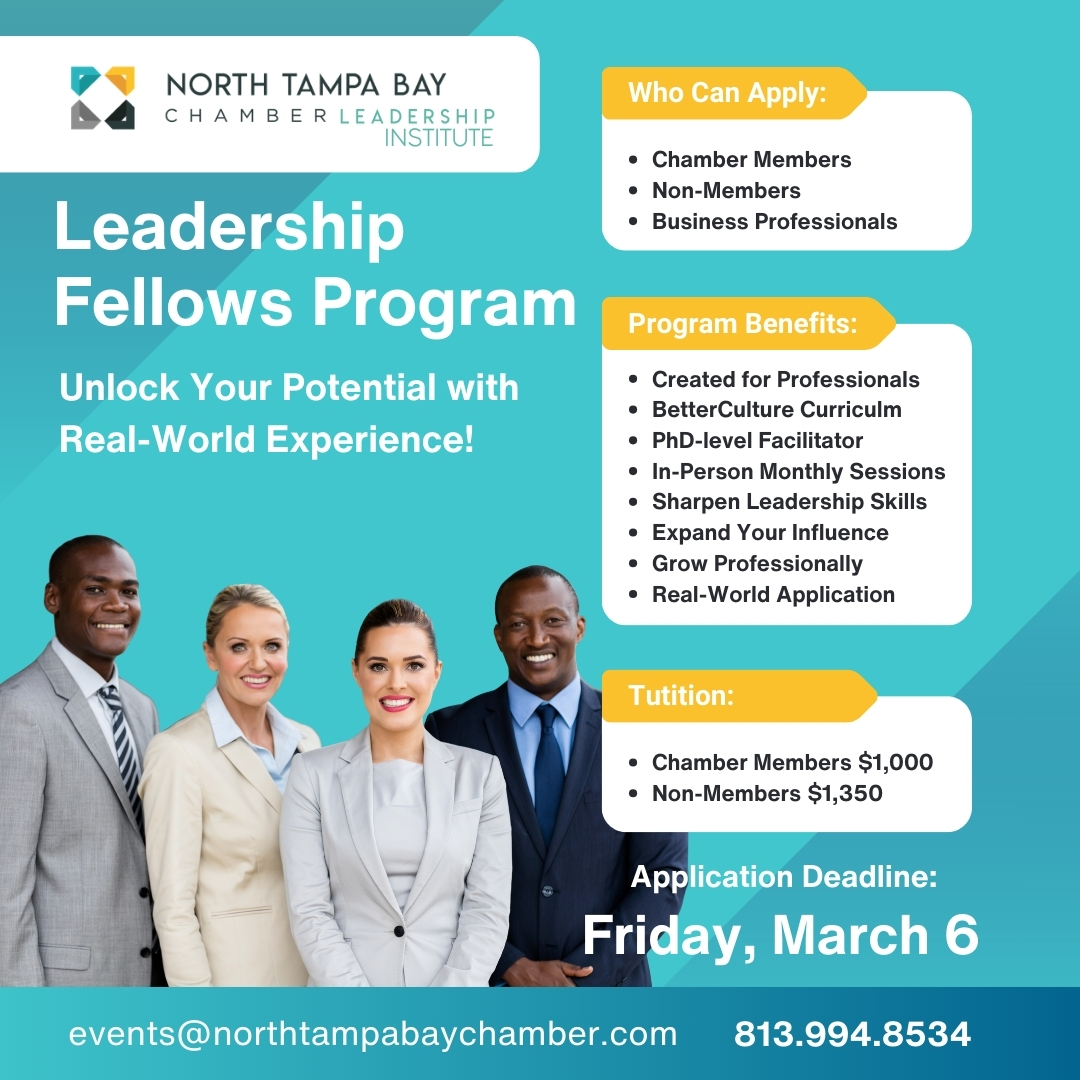
That is why I am so thrilled to facilitate the inaugural Leadership Fellows Program, part of the North Tampa Bay Chamber Leadership Institute. This is “a new leadership development initiative designed to strengthen the future of our business community by investing in high-performing professionals and emerging leaders.”
This advanced leadership program is for high-achieving professionals, business owners, and up-and-coming leaders who want to make a lasting impact and help shape North Tampa’s business community.
Leadership is a skill, not just a title.
A common myth about leadership is that it comes naturally when you reach a particular level in your work. In truth, leadership is a skill that needs to be practiced deliberately.
The best leaders are those who are always working to improve themselves. They think about how they talk to others, how they affect them, and how their actions build the culture of their teams.
Leadership development programs give professionals a break from their busy work lives so they may focus on building these important skills.
The Importance of Leadership Groups
The cohort-based architecture of the Leadership Fellows Program is one of its strongest points. Every month for eight months, participants will meet in a highly engaging small group. This format allows leaders to have important conversations, exchange their experiences, and learn from experts in different fields.
Being a leader can be lonely at times, especially for people who must make tough choices and lead teams. Cohort programs make it possible for leaders to have open conversations about problems, growth, and what it is really like to lead. These connections are typically the most important outcomes of leadership training.
Creating Strong Cultures in Organizations
The training will utilize the Better Culture leadership framework. This paradigm helps leaders actively foster healthy, effective workplace cultures by emphasizing key elements such as trust, open communication, and employee engagement.
Studies demonstrate that companies perform better when their CEOs create environments built on trust, mind safety, clear communication, power, and responsibility.
Leaders can create workplaces where people feel inspired, encouraged, and able to do their best work when they know how their actions affect these factors, such as team morale, productivity, and overall job satisfaction. Leaders create strong cultures by strategically planning for them. Leadership is a journey that never ends. The best leaders know that becoming a better leader is a never-ending process. There is always a chance to learn and improve in every situation, problem, and interaction.
The Leadership Fellows program and others like it are not about giving people easy answers or quick fixes. Instead, they help leaders learn more about themselves and how they affect those around them. When leaders are more mindful about how they show up, the impacts go well beyond their teams. Companies get stronger. People in communities get to know each other better. And people feel freer to share their skills and ideas, which fosters collaboration and innovation within the community.
A Question for Other Leaders
If you are a leader or want to be one, think about this: When was the last time you made a conscious effort to improve your leadership skills?
One thing that is common among the most effective leaders I have worked with is that they never stop learning. Instead, they see themselves as lifelong learners. They are still curious, think about opportunities for improvement, and want to be better leaders for the people they serve.
Looking Ahead
It is a tremendous honor for me to help start the Leadership Fellows Program and engage with individuals who want to improve their leadership skills and help our regional business community develop.
In the end, leadership is about putting money into people, their growth, their potential, and their ability to make a difference. Investing in leaders improves their skills and promotes innovation and growth in their communities.
Leadership is not about position; it’s about impact. What is one leadership practice you are intentionally strengthening this year?
With elevation and intention,
Dr. Jacqueline Nelms
Founder, Mindful Elevation: Strength & Resilience Within